 Tiny Weather
Baby Sleeping Bag TOG Guide: Room Temperature and Layers
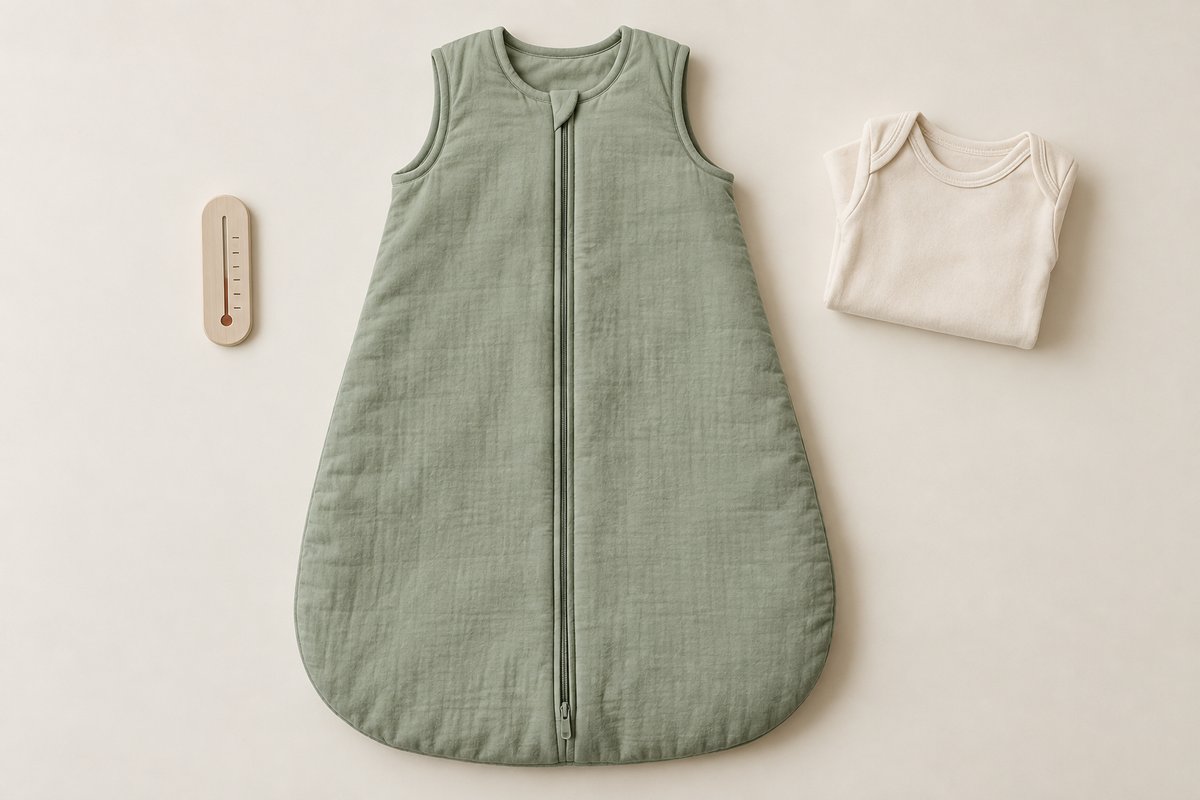
Choose your baby’s sleeping bag and clothing using the measured room temperature and the instructions for that specific bag. TOG describes insulation: a higher number means a warmer bag. It does not describe the warmth of the entire outfit.
The Lullaby Trust recommends following the manufacturer’s TOG guide. It does not publish a universal clothing-and-TOG chart because materials, layers, and babies differ. This article provides general information, not individual medical advice.
Start with the room and the bag
Use a room thermometer rather than the outdoor forecast. The Lullaby Trust recommends a sleeping room temperature of 16–20°C (61–68°F) as a general guide, with regular checks of your baby.
For context, NHS safer-sleep guidance lists these general sleeping-bag ranges:
- 2.5 TOG: 16–20°C (61–68°F).
- 1.0 TOG: 20–24°C (68–75°F).
- 0.5 TOG: 24–27°C (75–81°F).
These are general ranges, not instructions for a complete outfit. Check your product’s clothing, sizing, and temperature instructions before using it.
Reading the Tiny Weather illustration
The illustration below reproduces example combinations from a reference chart; it is not an NHS chart or a clinically validated recommendation system. Some combinations differ from the general NHS ranges above. Use a combination only if your own sleeping bag’s manufacturer supports it for that temperature and clothing. If its instructions differ, follow them instead.
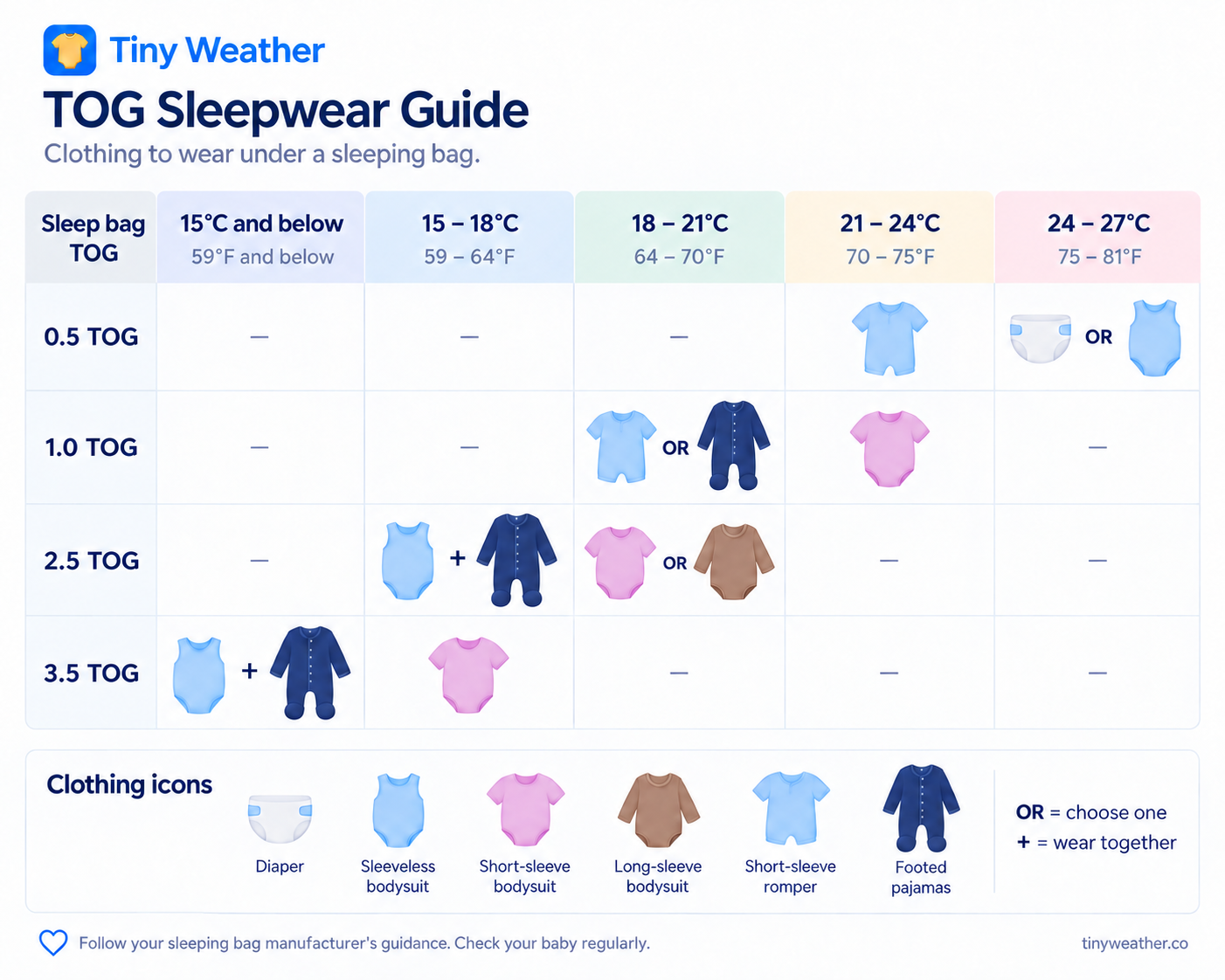
The row gives the sleeping bag’s TOG. The pictures show clothing underneath that bag. “OR” means choose one outfit; “+” means wear the two pictured garments together. A dash means no example is shown, not that no clothing is needed.
Combinations shown in the illustration
| Room temperature shown | Bag TOG shown | Clothing shown underneath |
|---|---|---|
| 24–27°C / 75–81°F | 0.5 | Diaper OR sleeveless bodysuit |
| 21–24°C / 70–75°F | 0.5 | Short-sleeve romper |
| 21–24°C / 70–75°F | 1.0 | Short-sleeve bodysuit |
| 18–21°C / 64–70°F | 1.0 | Short-sleeve romper OR long-sleeve footed pajamas |
| 18–21°C / 64–70°F | 2.5 | Short-sleeve bodysuit OR long-sleeve bodysuit |
| 15–18°C / 59–64°F | 2.5 | Sleeveless bodysuit + long-sleeve footed pajamas |
| 15–18°C / 59–64°F | 3.5 | Short-sleeve bodysuit |
| 15°C and below / 59°F and below | 3.5 | Sleeveless bodysuit + long-sleeve footed pajamas |
A bodysuit fastens at the crotch and leaves the legs uncovered. A romper here has short legs. Footed pajamas cover the arms, legs, and feet. These names describe shapes, not fabric thickness or insulation.
The bands share endpoints, so the illustration does not give one unique answer at 15, 18, 21, or 24°C. Its “15°C and below” column also has no lower limit specified: do not interpret it as evidence that this outfit is suitable at every colder temperature. Ask the manufacturer or a healthcare professional if the conditions fall outside your product’s guidance.
Fit and safer-sleep checks
A sleeping bag should fit around the neck and shoulders so your baby cannot slip inside. Follow its weight and sizing limits. Do not add blankets over a sleeping bag, stack two bags, or use a hat indoors. Avoid weighted sleep products for babies. These points follow Lullaby Trust guidance.
Place your baby on their back on a firm, flat sleep surface, with no pillows, toys, or loose bedding. For the first six months, their cot should be in the same room as you. See the NHS safer-sleep advice.
Check your baby, not just the chart
Feel the chest or back of the neck; cool hands or feet alone are not a reason to add layers. If the skin is hot or sweaty, remove layers. If the chest feels cold, consider another clothing layer or a warmer bag within its instructions, then recheck. Seek medical advice if your baby is unwell or you are concerned. Source: Lullaby Trust
Frequently asked questions
What TOG should I use at 18°C or 20°C?
The NHS general range for a 2.5 TOG bag includes 18–20°C. The illustration shows other example combinations, but it cannot establish their suitability for your bag. Use the product’s own temperature and clothing instructions.
What TOG should I use at 22°C?
22°C falls within the NHS general 1.0 TOG range. Check the manufacturer’s instructions for what to wear underneath; do not automatically substitute the illustration’s 0.5 TOG option.
Can one sleeping bag work all year?
There is no universal year-round choice. It depends on your room temperatures and the bag’s approved use. Do not assume that changing clothes underneath makes any TOG suitable for every season.
How should I use Tiny Weather’s sleepwear suggestions?
Sleepwear suggestions in the app require Premium and use the room temperature you enter. Use them to help plan, then check your bag’s instructions and your baby. An app or chart cannot verify the fit, fabric, or suitability of the sleeping bag you own.
For outdoor clothing, use our separate baby clothing temperature guide. Outdoor weather and indoor sleeping conditions are different decisions.
Get today’s outfit in the app
Free to start on iPhone and Android.