 Tiny Weather
How to Dress a Baby in a Carrier in Winter
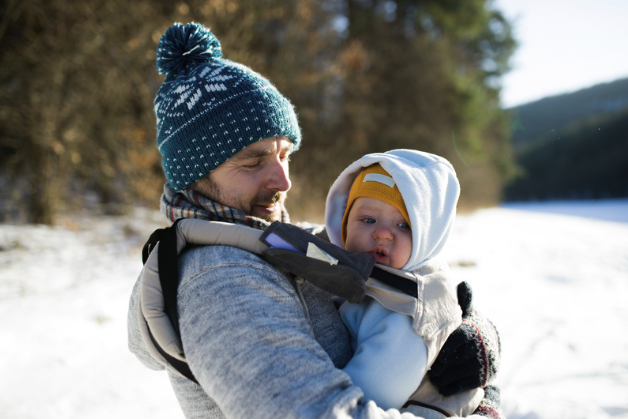
Dress a baby in a carrier in winter with adjustable layers, accounting for your body heat, the carrier fabric and any shared coat or carrier cover. Keep exposed legs and feet protected, and keep the face visible with the nose and mouth clear. A baby inside your coat needs a different clothing plan from a baby carried outside it.
Start by choosing the carrying setup. Then choose the clothes. Copying a pram outfit into a carrier can leave you with more insulation than you intended, particularly when you add your own coat around both of you.
This guide focuses on front carrying during winter outings. Follow your carrier’s age, weight, position and fitting instructions. The clothing examples are practical starting points for otherwise well babies, not temperature thresholds or a substitute for checking your child. For the wider picture, see our winter outdoor clothing guide.
First decide whether your baby will be inside or outside your coat
Think of the complete setup rather than counting only the clothes touching your baby:
- Inside a shared coat: baby clothes, carrier fabric and the coat all contribute to the arrangement around your baby.
- Outside your coat: your coat protects you, but it does not provide the same outer coverage for your baby. Consider their separate clothing and any compatible cover.
- Moving between the two: reassess the outfit before setting off again. Opening your coat or removing a cover changes the protection even though the forecast is unchanged.
Ergobaby’s winter babywearing advice highlights shared warmth and removable layers, and describes carrying under a roomy coat while leaving the baby’s head uncovered by the coat. Check your own products’ instructions rather than assuming every coat and carrier combination works the same way.
A useful question before leaving is: Which layer will I remove when we enter a heated building? If the only answer is to take your baby out and completely change them, consider a more adjustable setup.
What should a baby wear inside a babywearing coat?
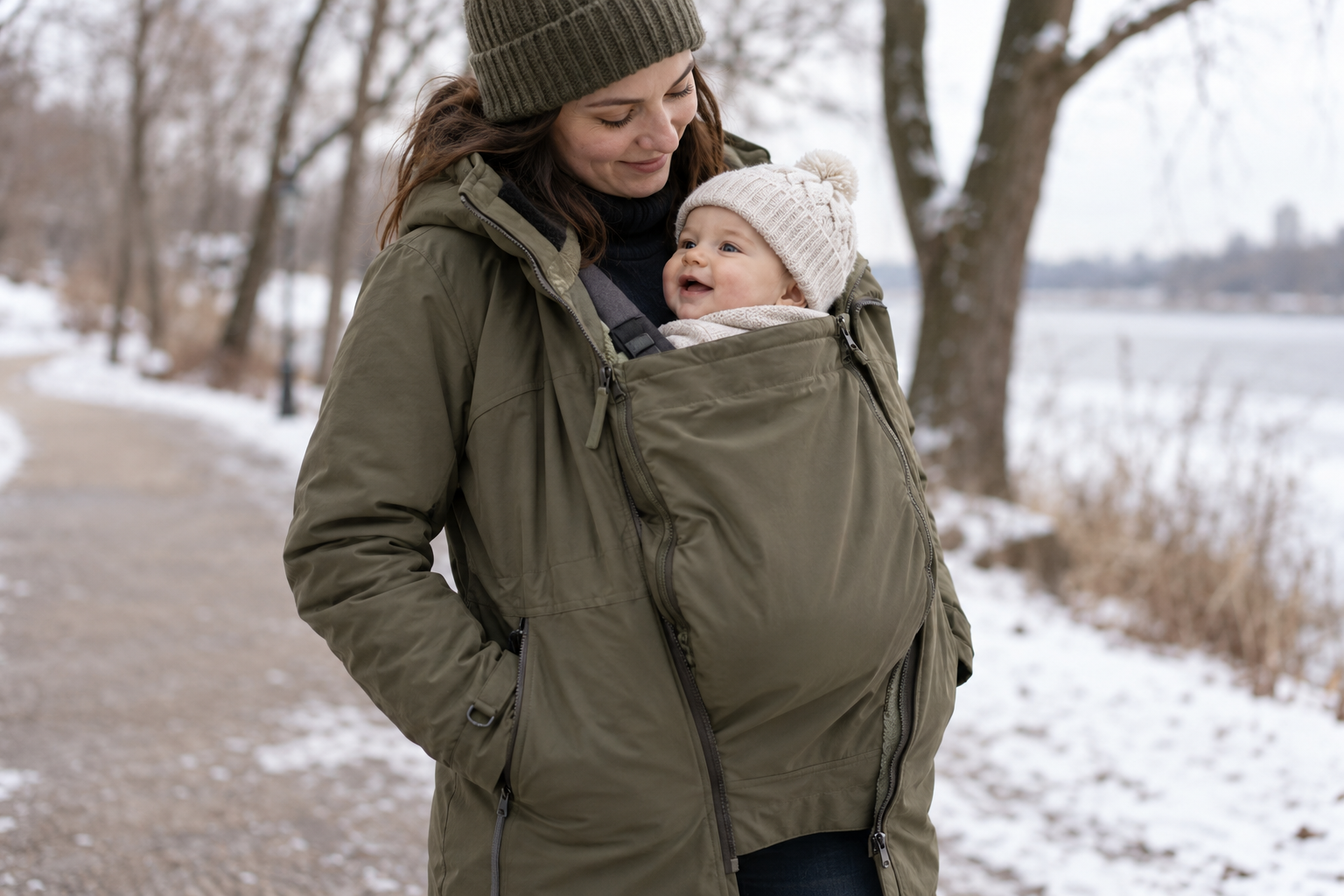
For a sheltered outing, an example to assess is a long-sleeve bodysuit, comfortable trousers, socks or booties, and an outdoor hat, with a light mid-layer available if needed. The shared coat supplies outer coverage; do not automatically add the full padded outfit you would use for an exposed pram ride.
This example is not enough information to choose clothes for every winter day. A thin shell and an insulated coat offer different protection, as do a short walk to the shops and a longer exposed route. Start with your equipment instructions and the actual conditions.
Before leaving:
- Fit the carrier as instructed, with your baby in an approved position.
- Arrange the outer coat without pressing fabric against the baby’s face or changing their supported position.
- Check that you can see the face without opening the coat or moving a scarf.
- Look at the lower legs and feet: they may extend beyond the coat’s coverage.
Never close a coat over your baby’s head or face to keep out the cold. If keeping the baby warm would require enclosing their face, change the setup or the outing.
What if the carrier is outside your winter coat?
When the baby is outside your coat, plan their weather protection separately. A light indoor outfit that worked under a shared coat may no longer be suitable.
Choose adjustable clothing that allows the carrier to fit properly. An illustrative setup is a base outfit, a removable warm mid-layer and a compatible outer cover where the conditions call for it. Use the cover’s instructions for fit, attachment and ventilation; keep the face clear.
Check the carrier over the clothes you will actually wear. A different adult jacket can change the fit, and a change in the baby’s clothing can require another fitting check. RoSPA recommends following manufacturers’ guidance and maintaining an upright, supported position with an unrestricted face.
If the arrangement feels unstable, restricts your view of the baby or prevents the carrier fitting as intended, get fitting help before using it outdoors. A local sling library or qualified carrying consultant can help you check your particular combination.
Does a baby need a snowsuit in a carrier?
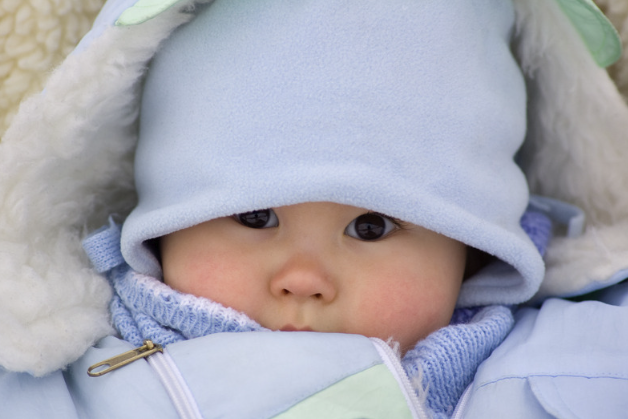
A snowsuit is not an automatic requirement for winter babywearing. Decide from the complete setup, the product instructions and the conditions, rather than the season’s name.
With a shared insulated coat, a padded suit may add insulation you did not need. With an exposed carrier, you still need to consider weather protection, but the chosen clothes must allow the carrier to support your baby correctly.
For example, if you are planning a short walk followed by time in a café, removable outer protection may be easier to manage than a thick all-in-one. If you expect persistent wind and wet weather, reconsider the route and duration as well as the outfit.
Do not use a pram temperature chart as a fixed carrier prescription. Our baby clothing temperature guide explains general outdoor starting points; the warmth and coverage around a carried baby are different.
Check feet and lower legs before you set off
Clothes can shift when you lift a baby into the carrier. Check that trouser legs have not ridden up and that socks or booties are still in place. If you use a footed outfit, make sure it has enough room in the carrying position and is not pulling tightly across the toes.
Look again after fitting the outer coat or cover. A warm torso does not mean that uncovered ankles are protected from the weather.
Pack spare socks or booties where you can reach them. They are useful if a pair gets wet or falls off, and easier to find at the top of a bag than beneath the changing supplies.
Keep the airway check separate from the clothing check
Warm clothes cannot compensate for an unsuitable position. Follow the TICKS guidance, as set out by the Lullaby Trust:
- Tight: a snug carrier fit that supports the baby close to you.
- In view: you can see the face throughout the outing.
- Close enough to kiss: your baby is carried high enough for you to kiss their head.
- Keep the chin off the chest: avoid a slumped position.
- Supported back: maintain the support required by the carrier instructions.
Watch where your own scarf, collar and coat lapels sit. Keep them clear of your baby’s nose and mouth. Recheck the arrangement after adjusting clothing or a cover.
The Lullaby Trust also advises taking a baby out of the sling to feed. Stop in a suitable place, remove the baby and feed them before refitting the carrier for the next part of the trip.
Check comfort after leaving home and when conditions change
Feel the upper chest or back of the neck underneath clothing. The Lullaby Trust’s clothing-comfort guidance explains that hands and feet can feel cooler than the torso. That source concerns sleep; it does not prescribe outdoor carrier outfits.
- Warm and dry: the outfit may be comfortable; keep observing.
- Hot, sweaty or clammy: reduce unnecessary insulation and reassess in a comfortable setting.
- Cool at the torso: seek shelter and reassess clothing and the outing.
Touch is a comfort check, not a way to measure fever or rule out illness. If your baby seems unwell, seek medical advice rather than assuming the outfit explains it. Our too hot or too cold guide explains this distinction in more detail.
Use the forecast to plan your route and backup layers. Wind, rain and exposure matter, but a feels-like value cannot tell you the temperature inside a shared coat. In severe conditions, follow local weather warnings and consider postponing the walk.
Going into a shop or moving your baby to a pram
Entering a heated building: open or remove unnecessary outer protection and remove the outdoor hat. Check warmth again rather than waiting until you leave. If you need to loosen or remove the carrier, support your baby and follow its instructions.
Moving to a pram: reassess the clothing before continuing. Your body and shared coat are no longer providing the same warmth. Have the appropriate pram layers available; see the winter outdoor guide.
Getting into a car: transfer your baby to an appropriate car seat. Check the seat’s clothing and harness instructions separately; a carrier cover is not a car-seat accessory.
A short winter carrier packing checklist
- Carrier checked for your baby’s size and intended position
- Coat or compatible cover arranged with the face fully visible
- Lower legs and feet checked in the carrying position
- Spare dry socks or booties and a spare base outfit
- One accessible removable layer suited to the outing
- Clothing ready for any planned transfer to a pram
- A sheltered stopping point and a way to shorten the route
Tiny Weather can help you check the local forecast and prepare a starting outfit. For babywearing, also account for your carrier and coat arrangement, then check your baby throughout the outing.
Frequently asked questions
How many layers should a baby wear in a carrier in winter?
There is no fixed number for every setup. Begin with the clothes, then account for the carrier, a shared coat or compatible cover, and exposed areas. Fabric weight and coverage matter as much as the number of garments.
Can I zip my coat around my baby in the carrier?
Only use an arrangement that fits your equipment instructions, preserves the carrying position and leaves the head and face clear of the coat. Your baby must remain visible. Do not force a coat to close if it pushes fabric against them or changes the carrier fit.
Should my baby wear a hat in a winter carrier?
An outdoor hat can protect an exposed head in cold conditions. It must fit without slipping over the face. Remove it indoors and reassess warmth; do not cover the baby’s face with a hood, scarf or coat.
What should a newborn wear in a carrier in winter?
First confirm that the carrier is suitable for your newborn’s weight and stage of development. Choose clothing that allows the instructed fit, with weather protection suited to the carrying setup. RoSPA recommends individual professional advice for premature or low-birth-weight babies. Ask for help with fit rather than relying on an older baby’s outfit example.
Is there a minimum safe temperature for babywearing?
This guide does not set a universal cutoff. Weather severity, exposure, equipment and your baby’s health all affect the decision. Follow local warnings, shorten or postpone an outing when needed, and seek individual advice if you are unsure about your baby’s needs.
About this guidance
Safety sources are linked beside the relevant advice. Clothing examples are Tiny Weather’s editorial suggestions and have not been tested as a universal winter outfit system. This is a source-based guide, not a clinical review or a substitute for the instructions supplied with your carrier, coat or cover.
Get today’s outfit in the app
Free to start on iPhone and Android.