 Tiny Weather
What Should a Baby Wear Outside at 10°C (50°F)?
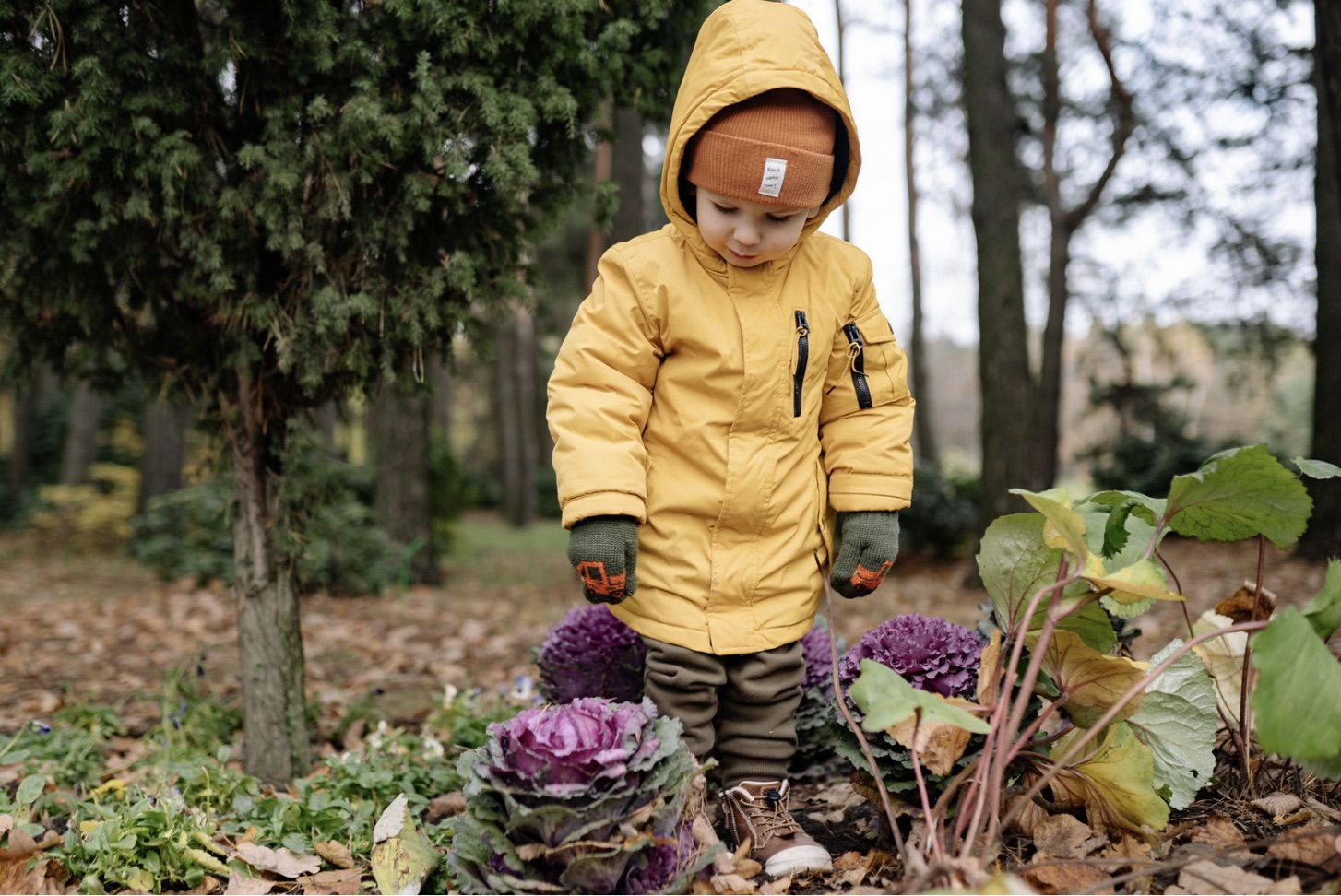
At 10°C (50°F) outside, a practical starting outfit is a long-sleeve bodysuit, trousers or a sleepsuit, a jumper or fleece, and a jacket, with socks or booties. Adjust the warmth for the fabric, wind and whether your baby is in a pram or held in a carrier. A lined footmuff or carrier cover adds insulation too; it is not a reason to keep adding clothes underneath.
These are Tiny Weather’s editorial outfit examples for typical healthy babies, not medically validated temperature rules. This guide is for outdoor trips. For indoor sleep, use the baby sleeping bag TOG guide. For a child who walks and plays, see the toddler clothing temperature chart.
Quick outfit examples for 10°C
Choose for the whole setup, not the number of garments alone. A thin cotton cardigan and a thick fleece provide different amounts of warmth.
| Situation | Starting point | What changes the choice |
|---|---|---|
| Baby in a pram or stroller | Long-sleeve bodysuit, trousers or sleepsuit, jumper or fleece, jacket, socks or booties | Wind exposure, length of the outing and any lined footmuff |
| Baby in a carrier | Thin, comfortable base clothing with covered legs and feet; adjust removable warmth to the carrier setup | Your body heat, carrier fabric and any shared coat or cover |
| Windy or damp walk | The appropriate pram or carrier outfit, with weather protection as needed | Keep clothing dry and preserve ventilation; extra jumpers do not replace rain protection |
The American Academy of Pediatrics recommends thin layers in cold weather. Its extra-layer rule of thumb is general guidance, not a chart prescribing an outfit at exactly 10°C. Check the conditions and your baby throughout the outing.
What should a baby wear in a pram at 10°C?
A baby sitting still may need more insulation than the adult walking behind the pram. Start with the pram example above, then consider what surrounds your baby: an open seat, a sheltered carrycot and a lined footmuff are different settings.
Keep layers accessible. If you add a footmuff, reassess the outfit rather than automatically combining a thick suit, a padded liner and a blanket. Follow the pram and accessory manufacturers’ fitting instructions.
If using a blanket during a supervised outing, keep it below the shoulders and clear of the face. Do not cover the pram opening. For shade, use a suitable canopy or parasol; NHS guidance warns that covering a pram with a blanket can cause overheating.
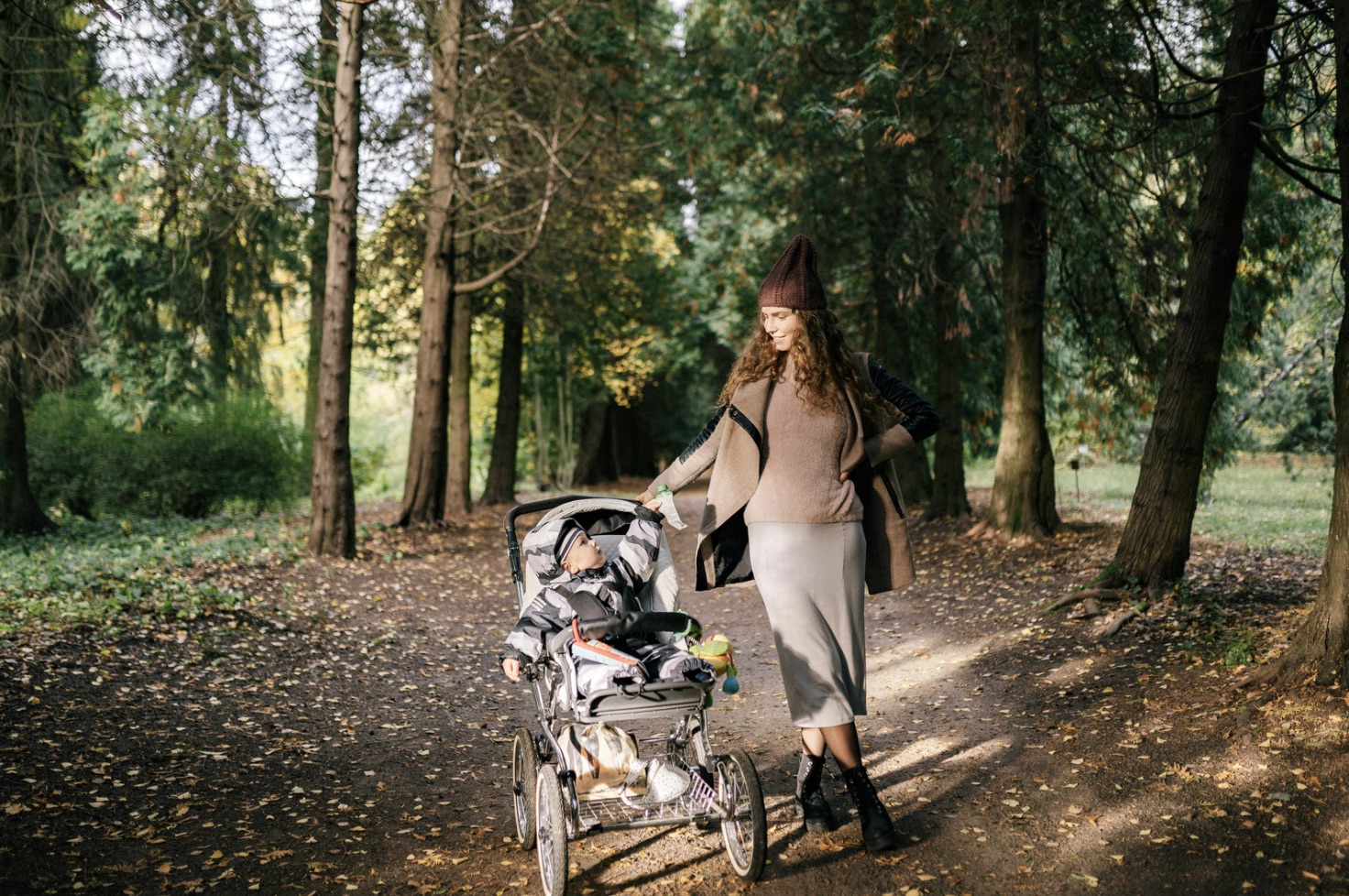
What should a baby wear in a carrier at 10°C?
Your body, the carrier and any shared coat contribute warmth. Do not copy a pram outfit without considering that extra insulation. Use clothing that lets the carrier fit correctly, then adjust removable outer protection for the weather.
Pay attention to exposed legs and feet: trousers can ride up when a baby is positioned in a carrier. Follow the manufacturer’s age, size and fitting instructions. Keep the face visible, the nose and mouth clear, the chin away from the chest and the back supported, following the Lullaby Trust’s TICKS guidance. Keep coats and covers away from the head and face.
Does a baby need a hat or winter suit at 10°C?
A suitable hat can be useful on a cool or windy walk, especially for a stationary baby. A heavy winter suit is not an automatic requirement at 10°C: its warmth needs to be considered alongside the clothes underneath and any footmuff or carrier cover.
Removable layers make changes easier when you enter a shop, the sun comes out or the wind drops. Reassess hats and outerwear in heated indoor spaces. For genuinely colder conditions, see how to dress a baby in winter.
What changes in wind, rain or sunshine?
- Wind: consider the forecast’s feels-like temperature and the actual exposure along your route. A sheltered pram and an exposed carrier do not experience identical conditions.
- Rain: protect clothes from getting wet and carry a dry change. Use a compatible pram rain cover according to its instructions, keeping ventilation clear and removing it when no longer needed. See the rainy-weather guide.
- Sun: a cool forecast does not remove the need for shade. Keep babies under six months out of direct sunlight, following the NHS guidance linked above.
- A warmer afternoon: carry a bag for removed layers. If temperatures rise towards 15°C, compare the 15°C baby outfit guide rather than keeping the morning outfit unchanged.
Check comfort during the walk
For an otherwise well baby, feel the upper chest or back of the neck beneath the clothes soon after setting out and regularly during the outing, especially after adding a cover or entering a heated space.
A warm, dry torso can suggest the outfit is suitable. Hot or sweaty skin can mean unnecessary insulation; remove a layer and reassess. A cool torso may call for more warmth or shelter. Cool fingers alone do not establish that more clothing is needed.
These checks assess clothing comfort, not body temperature or illness. If your baby seems unwell, seek medical advice rather than assuming the outfit is the cause. Read how to tell if your baby is too hot or too cold for the distinction between comfort checks and warning signs.
If you drive before the walk
Keep outdoor warmth separate from harness fit. AAP car-seat guidance advises against bulky coats and suits under the harness because they can compress and leave it loose.
Secure your baby in appropriate thin layers according to the seat’s instructions. If needed, place a blanket over the fastened straps, below the shoulders and clear of the face. Use only inserts approved for that seat. Add the outdoor jacket after leaving the car and reassess extra warmth as the cabin heats up.
What to pack for a 10°C outing
- A removable warm layer suitable for your pram or carrier setup
- A dry base outfit and spare socks or booties
- Weather protection if rain is forecast
- A bag for wet clothes or layers removed indoors
Tiny Weather can help plan a starting outfit using local weather and your child’s age and activity. Check your child and adjust during the trip. For other temperatures, use the baby clothing temperature chart.
Frequently asked questions
Can I use these outfits at 9°C, 11°C or 12°C?
Use them as a starting point, not a switch that changes at each degree. Fabric, wind, exposure and the pram or carrier setup can matter more than a small forecast change. For a wider comparison, use the temperature chart linked above.
What should a newborn wear outside at 10°C?
Use the pram or carrier example as a starting point, paying attention to fit, covered feet and comfort checks. For a premature or unwell baby, or one with specific health needs, ask their clinician for individual advice.
Does my baby need a blanket as well as a jacket?
Not automatically. Consider the jacket, pram lining and footmuff together. Keep any supervised blanket clear of the face and remove unnecessary warmth when conditions change.
Is 10°C too cold to take a baby outside?
The temperature alone cannot determine whether an outing is suitable. Consider your baby’s health, wind, rain, local warnings, exposure and access to shelter. Clothing cannot make every outing appropriate; seek individual advice if you are unsure.
About this guidance
The numerical outfit examples are editorial suggestions, not an AAP or NHS temperature chart. Safety sources are linked beside the relevant advice. This is a source-based editorial review, not a clinical review.
Get today’s outfit in the app
Free to start on iPhone and Android.