 Tiny Weather
Baby’s First Flight Packing List: Carry-On Essentials & What to Wear
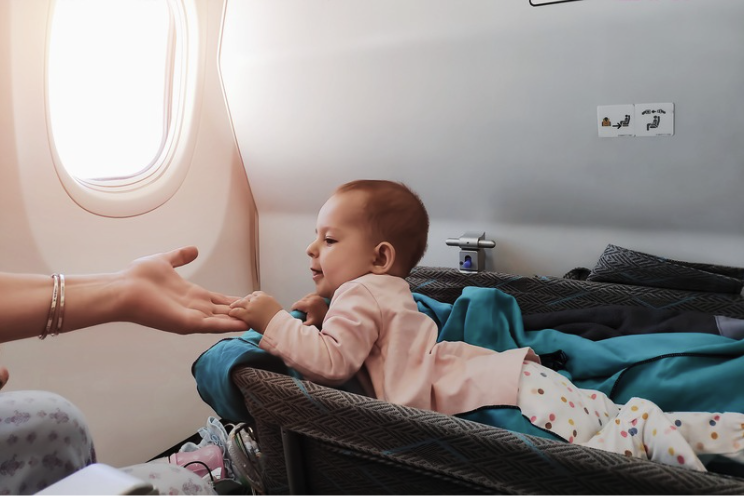
For your baby’s first flight, pack nappies, wipes, a changing mat, two or three spare outfits, feeding supplies for the whole journey plus delays, a removable clothing layer, necessary medicines, travel documents, and a spare top for yourself. Keep these in your carry-on, along with anything your baby will need before you reach your accommodation.
The easiest way to decide what to bring is to picture the day from leaving home to unpacking at your destination. A short flight may sit in the middle of a much longer stretch of airport queues, transfers, and waiting. Pack for that whole stretch, not just the time in the air.
This checklist focuses on babies who still need frequent feeding and nappy changes. If your child is walking, eating family snacks, or toilet training, use our toddler plane packing list.
For an everyday trip close to home, use our newborn diaper bag checklist with quantities for a shorter outing.
Baby’s first flight: carry-on checklist
Keep travel-day essentials in cabin luggage within your airline’s allowance. A small changing pouch inside the bag saves you carrying everything into an aircraft toilet.
- Nappies (diapers): your baby’s usual number for the entire door-to-door journey, plus extras for delays
- Wipes, a portable changing mat, and your usual nappy cream
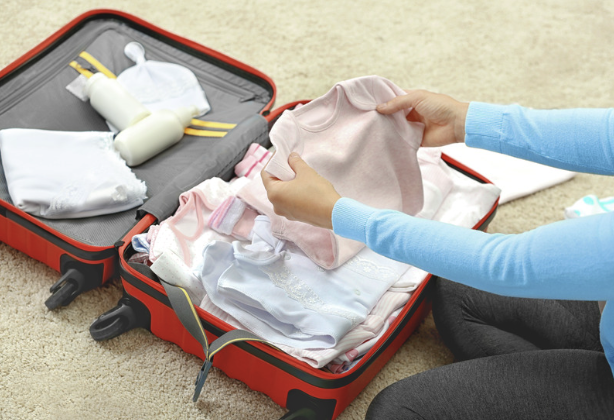
- Two or three complete spare outfits, including socks if the outfits do not cover the feet
- One removable cardigan or other light layer
- A spare top for each accompanying adult who may need one
- Wet bags or sealable bags for used clothes and changing supplies, kept out of your baby’s reach
- Milk and feeding equipment appropriate to your usual routine, with a plan for delays
- Bibs and burp cloths you already use at home
- Familiar food and feeding utensils, only if your baby already eats solids
- A dummy (pacifier), if used, and a clean spare
- One or two small, age-appropriate toys or a board book
- Necessary medicines and supporting documents, if required
- Your baby’s required travel documents, boarding details, and any consent paperwork relevant to your journey
- Arrival-weather layers, such as a jacket or sun hat
- Your own essentials, including phone, documents, and any feeding-related items you need
You do not need a separate travel version of every baby product. Start with what your baby uses during an ordinary day, then decide how you will manage without easy access to washing facilities or your usual shops.
How many nappies and spare outfits should you pack?
Use your baby’s normal routine as the baseline, then add a practical buffer. Two complete spare outfits are a starting point for a straightforward journey; consider three or more for frequent leaks, spit-up, connections, or overnight travel. These are packing estimates, not fixed requirements.
For example, if your baby would normally use five nappies during the hours you will be travelling, packing eight gives you three additional changes. If a missed connection could add most of another day, plan a larger reserve rather than relying on that example.
An outfit means a complete change: a clean bodysuit is not enough if trousers and socks are wet too. Pack each set together, with the first change near the top of the bag. A simple sleepsuit can be easier to manage than several separate garments.
Keep one clean set available for the transfer after landing. It can also be your arrival outfit; there is no need to count it twice. Spare holiday clothes beyond your travel-day reserve can go in checked luggage.
What feeding supplies belong in hand luggage?
Pack around the way your baby already feeds, including what you need to store milk and keep equipment clean. Do not assume the aircraft will stock your formula, provide suitable preparation facilities, or refrigerate milk for you.
If you breastfeed or express milk
Bring the items you normally need, such as breast pads, burp cloths, and any pumping equipment. If you use a pump, include the necessary parts and power arrangements, checking airline battery rules where relevant. For expressed milk, plan storage across the entire journey using CDC guidance for travelling with breast milk.
If you use formula
Bring your baby’s usual formula and enough suitable feeding equipment for the journey and a delay. Work out preparation, cleaning, and storage before leaving home. Follow the product instructions and relevant health guidance; airport convenience does not change those instructions.
Do not rely on finding a particular brand after security. If considering a different format for travel, check that it is suitable for your baby and that you understand its instructions before the trip.
If your baby eats solids
Bring familiar foods appropriate to their eating skills, along with a spoon and bib if needed. Follow storage instructions and check destination restrictions before taking leftover food through customs. Food does not replace your baby’s usual milk feeds.
Can you take baby milk and food through airport security?
Baby feeding supplies may qualify for liquid exemptions, but the rules depend on where you pass through security. Keep them accessible for inspection and check every departure airport, including connections and the return journey.
- United States: the TSA lists formula, breast milk, and baby food as permitted in quantities above 100 ml (3.4 oz). Tell the officer you have them and remove them for separate screening. Cooling accessories also have specific allowances.
- United Kingdom: GOV.UK permits baby food, milk, and sterilised water needed for the journey, with conditions depending on the item. For example, its guidance distinguishes expressed breast milk from formula and has separate rules for frozen breast milk. Check the details with your airport.
- Other departures: use the airport or national security authority’s current guidance rather than assuming UK or U.S. rules apply.
A security exemption is not an extra airline baggage allowance. Confirm separately whether a changing bag counts towards your cabin allowance and whether your baby has their own allowance.
What should a baby wear on their first flight?
Choose a soft bodysuit with comfortable trousers or a simple sleepsuit, plus an easy-to-remove layer. Pick fastenings that make a nappy change possible without taking the entire outfit off. Avoid stiff waistbands, elaborate outfits, and accessories that get in the way when holding or fastening your baby in their restraint.
The American Academy of Pediatrics recommends layers and clothes that allow easy changes when flying with a baby. Cabin conditions can vary, so carry a cardigan rather than assuming the plane will always be cold.
Remove outdoor coats and warm hats when they are no longer needed indoors. Adjust layers to your baby’s comfort instead of keeping the departure outfit on for the whole journey. Our guide to checking whether a baby is too hot or too cold explains clothing comfort checks.
Pack for the weather when you land
Keep arrival clothes in the cabin, even when you have checked luggage. You may use outdoor aircraft steps or a bus before reaching baggage reclaim, and a delayed suitcase should not leave you without the right layer.
Check the forecast for your landing time and transfer, including rain and wind. The day’s maximum temperature may be very different from the conditions outside the airport at night.
Flying from cold weather to a warm destination
Use a light base outfit with removable departure layers. Keep a sun hat and a lighter change accessible if needed, and leave room in your bag for the jacket you take off. Adjust before going into the heat rather than waiting until you reach the hotel.
Flying from warm weather to a cold destination
Carry the warm layers your baby will need outside: suitable outerwear, socks or booties, and a hat where conditions call for one. Keep them reachable before leaving the aircraft. For the onward car journey, follow your car seat’s instructions on clothing and harness fit; bulky coats can interfere with a snug harness, as explained in AAP winter car-seat guidance.
Use our baby clothing temperature chart as a starting point for outdoor outfits. It is not a guide to cabin temperature.
Tiny Weather can help you plan clothes around your destination’s forecast. For the stay itself, see our baby packing list for a summer holiday.
Stroller, carrier, and car seat: decide before packing
These items affect how you move through the airport and how much you can carry. Confirm arrangements with the airline before arriving at the gate.
Stroller
Ask whether your stroller can be used up to the gate, whether it needs a bag, and where it will be returned. Gate checking does not guarantee that it will be waiting beside the aircraft at your destination. Remove anything you need from its basket before handing it over.
Baby carrier
A familiar carrier may help while walking through the terminal, especially if the stroller goes to baggage reclaim. Follow its instructions and the crew’s directions on board. A carrier is not a substitute for an approved aircraft child restraint.
Car seat and aircraft seating
The AAP recommends an approved child restraint as the safest way for a baby to fly. Before bringing a seat, confirm its aircraft approval, suitability for your baby, fit, and acceptance by the airline. Arrange the required aircraft seat in advance rather than relying on an empty seat becoming available.
Also arrange a suitable car seat for your transfer at the destination. Do not assume a taxi or booked transfer will have one without confirmation.
How to organise the bag you will use on board
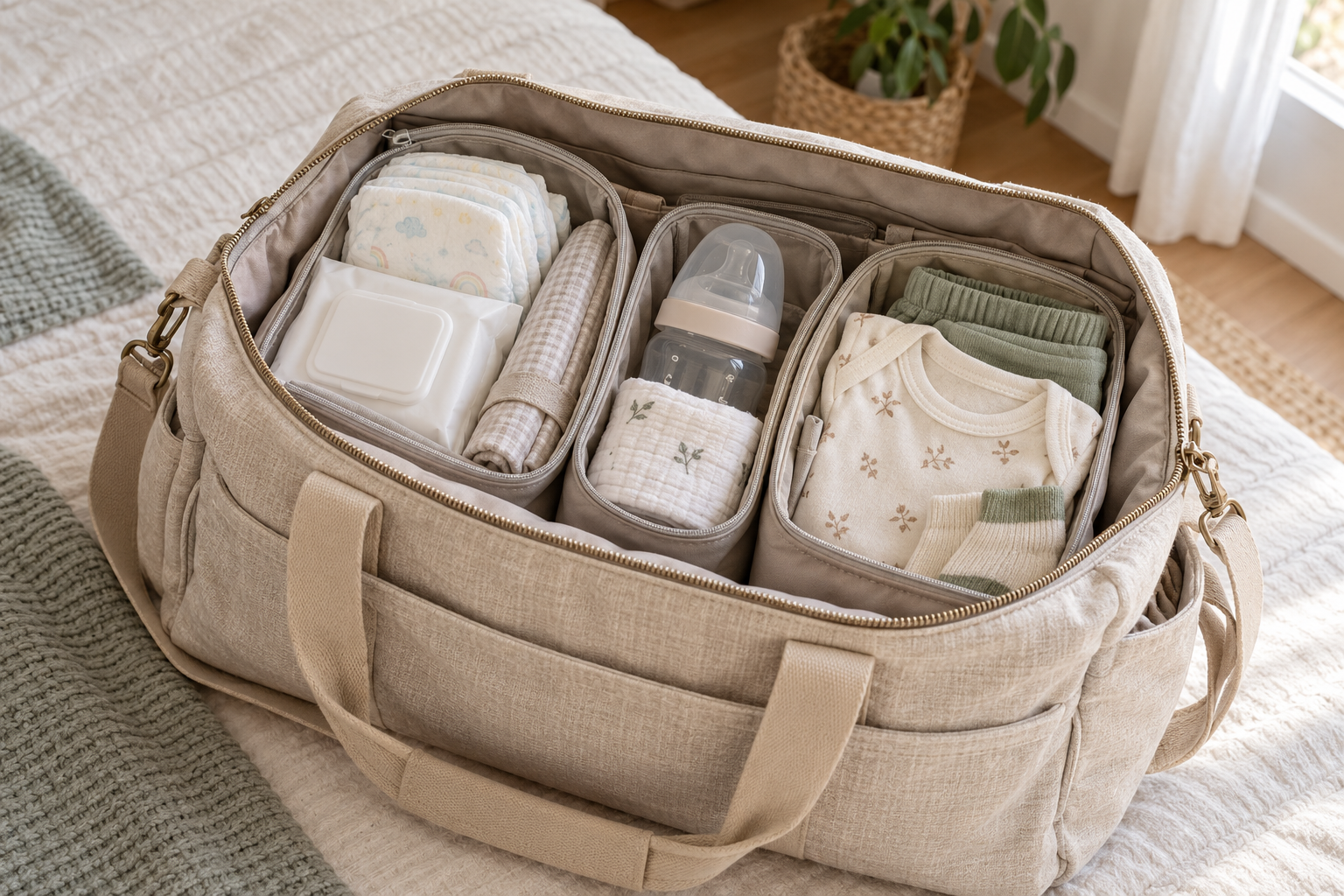
Divide the contents into three small groups:
- Changing pouch: a few nappies, wipes, mat, one full outfit, and a wet bag.
- Feeding supplies: the items for the next feed, with backups and storage equipment kept together.
- Comfort and clothing: a removable layer, dummy if used, and one small toy.
Keep the most useful items in the bag that will be easiest to access when the crew permits it. Storage rules vary by seat and aircraft; do not assume a bag can stay at your feet throughout the flight.
If staff need to put your cabin bag in the hold at the gate, first remove documents, medicines, feeding supplies, changing supplies, and spare clothes. Keep that smaller essentials bag within your permitted allowance.
What can go in the checked suitcase?
Pack the bulk of your holiday clothes, extra nappies beyond the travel reserve, and non-essential equipment in checked luggage, subject to baggage rules. Think of the cabin bag as what you need to get through the journey if that suitcase is delayed.
Leave behind large collections of toys and gadgets that you have not tried at home. Before packing a flight bed, seat extender, or similar accessory, check airline permission. Booking an aircraft bassinet also requires checking availability and size limits; it is not guaranteed simply because you are travelling with a baby.
Frequently asked questions
What should I pack for a three-month-old’s first flight?
Focus on feeding supplies, nappies, spare clothes, burp cloths, and a removable layer. You can leave out the solids and snack items if your baby is not eating them. Confirm the airline’s age and documentation requirements; discuss travel with your clinician if your baby has medical needs or you have concerns about their fitness to fly.
Is two spare outfits enough for a baby on a plane?
Two may be a useful starting point for a simple journey, but your baby’s usual changes matter more than a fixed number. Add more for frequent spit-up or leaks, long transfers, and connections. Pack a spare adult top too.
Does a baby need shoes for a flight?
For a baby who is not walking, socks, booties, or a footed outfit may be more practical than shoes. Choose for comfort and the weather during transfers. A walking child needs suitable footwear for the airport.
Should I pack everything in the nappy bag?
Keep frequently used items together, with reserve supplies elsewhere in your cabin luggage if your allowance permits. A small changing pouch is easier to handle than a full bag in a confined space. Check whether your airline counts the nappy bag as a separate item.
What is the most useful last check before leaving?
Make sure you can reach a full outfit, changing supplies, and the next feed without emptying the bag. Then confirm documents, seating arrangements, milk storage, and the forecast at arrival. Those checks are more useful than adding another unfamiliar travel gadget.
About this guidance
Packing quantities and outfit examples are Tiny Weather’s editorial suggestions, to adjust to your baby and itinerary. Official travel and health sources are linked beside the relevant advice and were consulted in October 2026. Confirm airport and airline rules before departure, including for connections and the return journey.
Get today’s outfit in the app
Free to start on iPhone and Android.