 Tiny Weather
What Should a Baby Wear Outside at 5°C (41°F)?
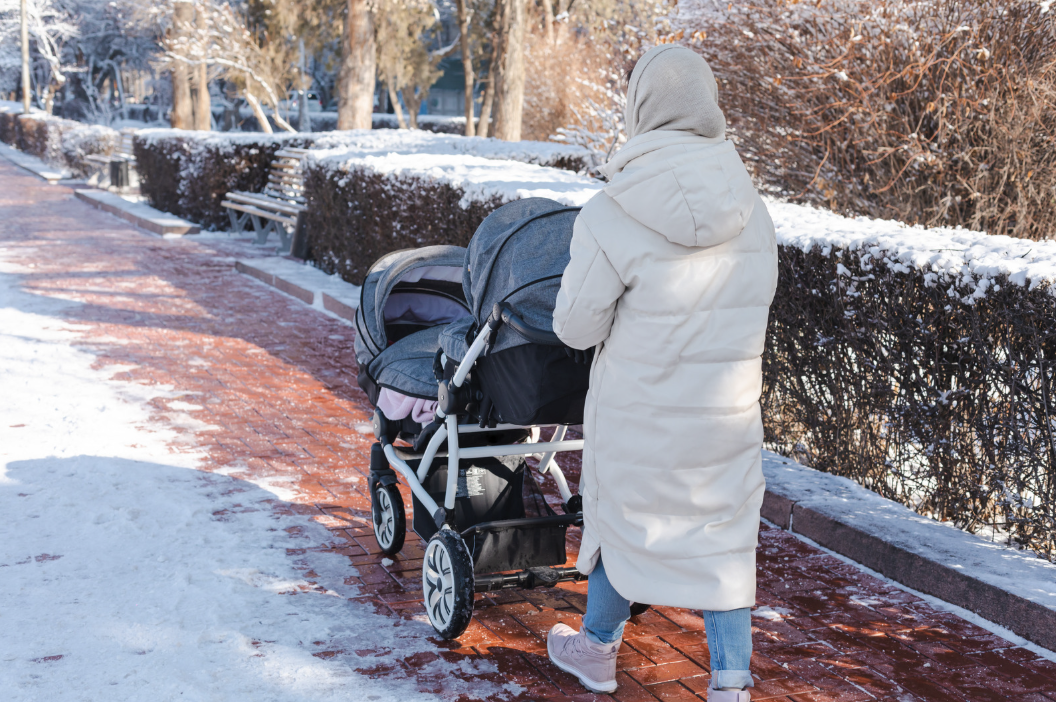
At 5°C (41°F) outside, a practical pram outfit to assess is a long-sleeve bodysuit, trousers or a sleepsuit, a warm mid-layer and insulated outerwear, with a hat, mittens and warm socks or booties. If you use a lined footmuff, count that insulation before adding more clothing. For a baby in a carrier, choose for the carrier and coat setup rather than copying the pram outfit.
These are Tiny Weather’s editorial starting examples, not medically validated outfits for every baby at 5°C. Fabric thickness, wind, rain, exposure and your baby’s needs change the decision. This guide covers outdoor clothing; for indoor sleep, use the baby sleeping bag TOG guide.
Start with the whole setup at 5°C
Before choosing a coat, decide where your baby will be during the outing:
- Pram without a lined footmuff: assess a base outfit, warm jumper or fleece, and insulated outerwear with head, hand and foot protection.
- Pram with a lined footmuff: review the clothing together with the footmuff’s coverage and instructions. It adds warmth; it is not a reason to keep adding a padded suit and blanket automatically.
- Carrier inside a shared coat: fit the carrier with comfortable clothing, then assess the coat’s coverage, leaving the head and face clear.
- Carrier outside your coat: plan separate outer protection for the baby, compatible with the carrier and its fitting instructions.
The American Academy of Pediatrics recommends several thin layers for cold-weather outings. Its extra-layer rule of thumb for older babies and young children is general advice, not a prescription for a fixed garment count at exactly 5°C.
What should a baby wear in a pram at 5°C?
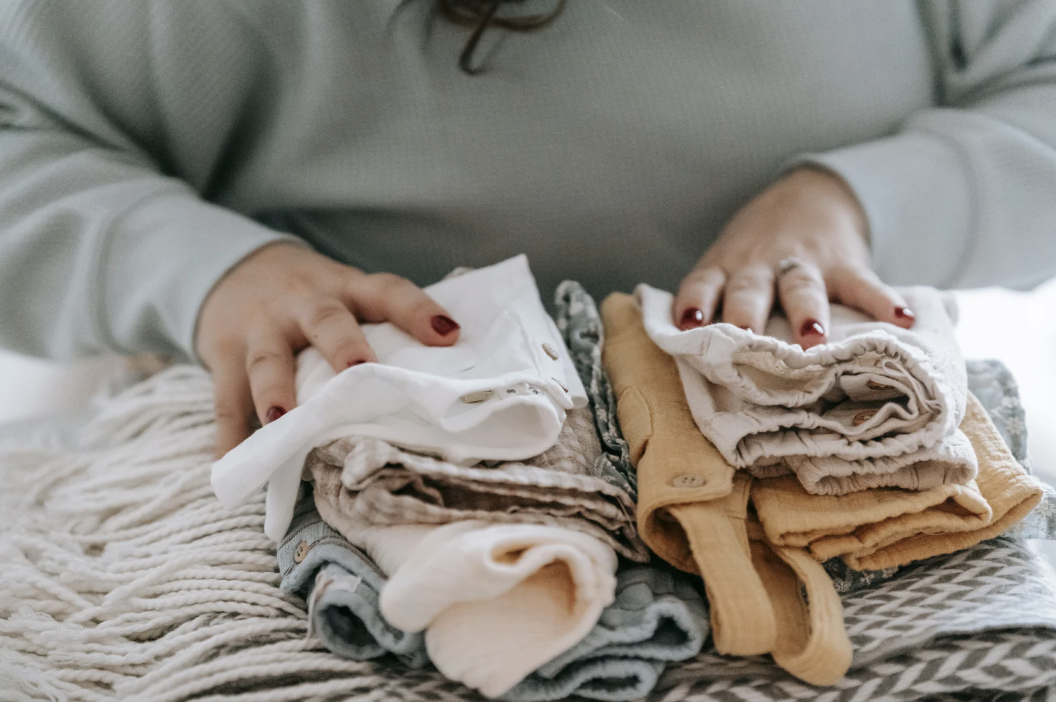
Lay out the clothes and pram accessories together before dressing your baby. Start with the base outfit, then decide which items provide insulation and which protect against the weather.
For a sheltered walk without a lined footmuff, an outfit to assess is:
- A long-sleeve bodysuit with trousers, or a suitable sleepsuit as the base outfit.
- A removable warm jumper or fleece.
- Insulated outerwear suited to the conditions.
- A well-fitting outdoor hat, mittens and warm socks or booties.
“Sleepsuit” here describes a garment, not permission to use the whole outdoor outfit for indoor sleep. Keep your change of setting in mind when you plan the layers.
What changes if you have a footmuff?
A lightly lined cover and a heavily insulated footmuff are different products. Read the instructions for yours, including compatibility with the pram and harness. Look at what it covers: protection around the legs does not tell you how much insulation surrounds the chest.
For example, if your plan already includes a warm mid-layer and insulated outerwear, adding a thick footmuff changes the complete setup. Reassess that combination before setting off rather than treating every item as an independent necessity.
Keep the pram opening clear. The NHS warns against draping a blanket over a pram because it can cause overheating. That source concerns sun safety; the practical point here is to preserve airflow rather than enclosing the baby to block wind.
Does a baby need a snowsuit at 5°C?
A snowsuit is not an automatic requirement at 5°C. Its usefulness depends on the rest of the clothing, pram accessories and exposure. A padded all-in-one can be harder to adjust during a trip involving heated indoor stops.
Compare two plans: a walk entirely outdoors, and a short walk followed by a long café visit. The forecast might be identical, but you need an easier way to remove outer insulation for the second outing.
Choose an arrangement you can adjust. The winter outdoor guide explains the separate jobs of base clothing, insulation and weather protection across colder conditions.
What should a baby wear in a carrier at 5°C?
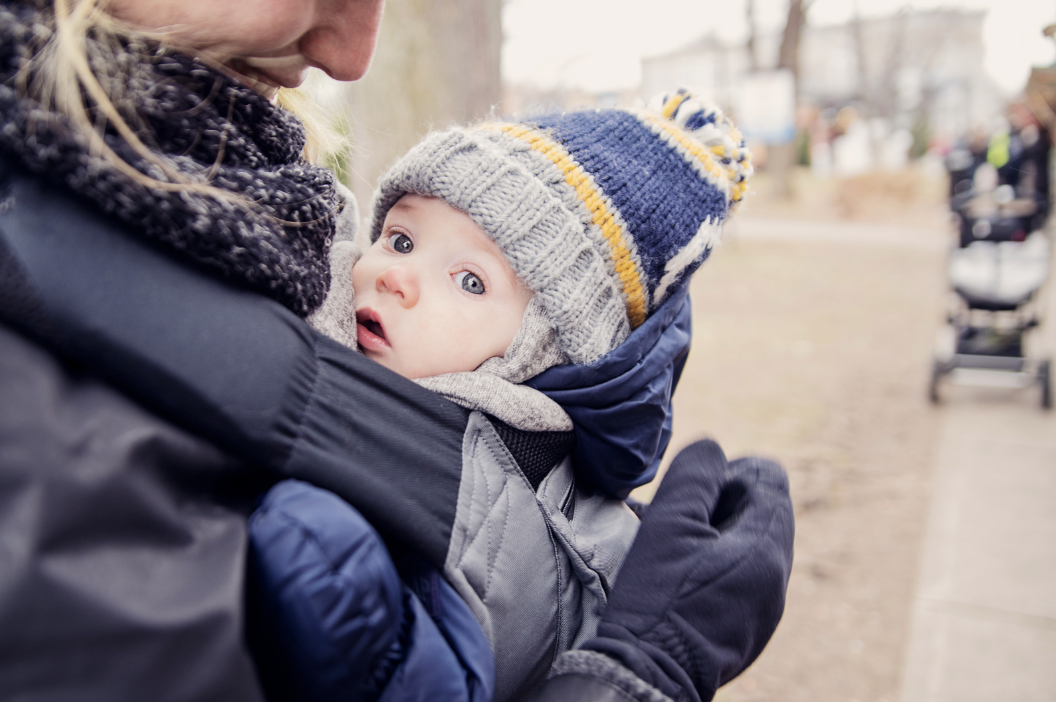
Start by deciding whether your baby is inside or outside your coat. The insulation around them changes when you open a shared coat or remove a carrier cover.
With a shared babywearing coat, assess comfortable base clothing and a removable mid-layer together with the carrier fabric and coat. For an exposed carrier, assess separate weather protection permitted by your equipment instructions. There is no single 5°C carrier outfit that covers both arrangements.
Follow the manufacturer’s instructions for your baby’s size and carrying position. The Lullaby Trust’s TICKS guidance calls for a snug fit, a visible face, a high position close enough to kiss, the chin off the chest and a supported back. Keep scarves, collars and covers clear of the nose and mouth.
Check exposed lower legs after fitting: trousers may ride up. Footed clothing should have enough room in the carrying position without pulling on the toes. See our winter babywearing guide for the full shared-coat comparison.
Wind, rain and a forecast that warms later
Use the forecast as a route-planning tool as well as a clothing prompt. At the same air temperature, an exposed windy path and a sheltered street can call for different adjustments. A feels-like reading is useful context, but cannot measure conditions inside a coat or footmuff.
If rain is expected, choose compatible weather protection, preserve ventilation and keep dry spares accessible. Follow product instructions for fitting and removing a pram rain cover. Our rainy-weather clothing guide covers wet outings in more detail.
If the day warms towards 10°C, compare the 10°C baby outfit examples. Plan somewhere to put removed layers. Follow local weather warnings and shorten or postpone an outing when conditions call for it; extra clothing does not make every trip suitable.
Check comfort and adjust when you go indoors
For an otherwise well baby, feel the upper chest or back of the neck under clothing. Hands and feet can feel cooler without meaning the whole baby needs another layer. Hot or sweaty skin calls for reducing insulation and reassessing; a cool chest calls for reviewing warmth and seeking shelter. The Lullaby Trust describes these checks in its sleepwear guidance; it does not prescribe outdoor outfits at 5°C.
Reassess regularly, especially after changing a cover or entering a heated space. Remove unnecessary outer layers and the outdoor hat indoors. Touch is a comfort check, not a fever measurement. If your baby seems unwell, seek medical advice rather than assuming clothing explains it. Read our too hot or too cold guide for more context.
If you drive before the walk
Keep the outdoor outfit separate from car-seat harness fit. The AAP advises against bulky coats and snowsuits under the harness, because padding can compress in a crash and leave slack.
Use suitable thin clothing and follow the seat’s instructions. If additional warmth is needed, a blanket can go over the fastened harness, clear of the face. Use only accessories approved for that seat, and add outdoor outerwear after transferring to the pram or carrier.
What to pack for a 5°C walk
- A dry base outfit and spare socks or booties.
- Spare mittens if used.
- One accessible removable layer suited to your setup.
- Compatible weather protection if rain is expected.
- A bag for wet clothes and removed outerwear.
- A route with shelter and an option to return early.
Tiny Weather can help you plan a starting outfit from local weather and your child’s age and activity. Account for the equipment you use as well, then check your baby during the outing. You can download Tiny Weather before planning your next walk.
Frequently asked questions
Is 5°C too cold to take a baby outside?
The number alone does not establish whether a trip is suitable. Consider wind, rain, exposure, equipment and your baby’s health. This guide does not set a universal safe duration. For newborns, premature babies or babies with medical needs, seek individual advice where needed.
Is 41°F the same as 5°C for choosing clothes?
Yes. 5°C equals 41°F. Use the same outfit planning process whichever unit your forecast shows, with adjustments for the actual conditions.
Can I use a 2.5 TOG sleeping bag instead of outdoor clothing?
An indoor sleeping bag’s TOG rating does not establish its suitability for a pram or carrier. Use each product only as instructed, including its intended setting and compatibility. Outdoor clothing and bedroom sleepwear are separate decisions.
Should a walking toddler wear this outfit too?
Use the toddler clothing temperature chart for active play. This article focuses on a baby who is mostly stationary in a pram or carried against an adult.
About this guidance
Sources were checked on 15 November 2026. Outfit examples are Tiny Weather’s editorial suggestions, not an NHS or AAP temperature chart or a clinically validated dressing system. Product instructions and individual healthcare advice take priority for your child and equipment.
Get today’s outfit in the app
Free to start on iPhone and Android.