 Tiny Weather
What to Pack for a Holiday With a 6-Month-Old: A Practical Checklist
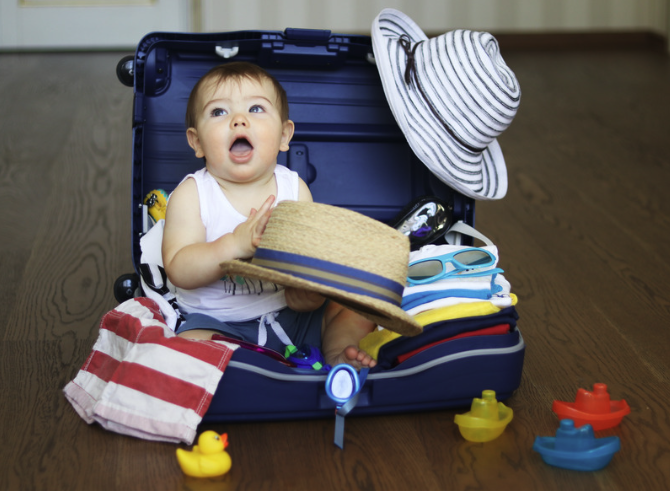
For a holiday with a 6-month-old, pack milk-feeding supplies, nappies and changing essentials, clothes for the forecast, sleepwear, an arranged safe sleeping space, suitable transport equipment, and any food and utensils your baby already uses. For seven days without laundry, start with 10 complete daytime outfits and 9 sleep outfits, then adjust to your baby’s usual changes. Keep travel-day essentials in a separate accessible bag.
At six months, a packing list needs to account for more than small clothes. Your baby may be starting solids, rolling, or needing different equipment from the newborn stage. Pack for what they actually do now, not everything marketed for their age.
This guide covers a week away, including what to confirm with your accommodation. For hot-weather clothing specifically, use our summer baby packing list. For airport and cabin preparation, see what to pack for your baby’s first flight.
Check these five things before opening the suitcase
Travelling with an older sibling? Use our toddler holiday packing list for their clothes, toilet-training supplies and travel-day bag, then count shared family equipment once.
A few messages to your accommodation can save more space than another packing cube. Confirm what will be available, rather than assuming “baby-friendly” includes everything you need.
- Sleeping space: ask which cot or travel cot is provided, whether it suits your baby’s size and development, and what mattress and fitted sheet come with it.
- Feeding facilities: check access to clean water, washing facilities, and the equipment needed for your usual preparation and sterilising method. If you need a fridge, confirm its suitability for food storage.
- Laundry: find out when you can wash, how clothes will dry, and whether detergent is supplied. A washing machine without reliable drying changes the quantities below.
- Transport: arrange a suitable car seat for transfers and decide whether a stroller, carrier, or both will be useful on your actual routes.
- Local supplies: check whether you can obtain your usual nappies and feeding products nearby, including when shops will be open after arrival.
Then check the destination forecast: daytime and evening temperatures, rain, wind, and likely time outdoors. Ask about room heating or air conditioning, but choose sleepwear using the room temperature when you arrive.
How many clothes does a 6-month-old need for a week away?
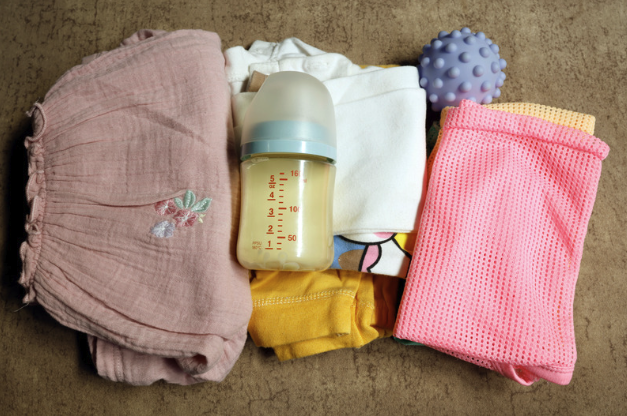
The following quantities are editorial packing estimates for seven days and seven nights, not health recommendations. They assume roughly one daytime outfit and one sleep outfit per day, with spare changes. If your baby regularly gets through two or three outfits daily, use that routine instead.
A complete daytime outfit means a bodysuit with bottoms, or a one-piece outfit, plus any separate base layer you normally use. A sleep outfit means clothing worn for sleep, not a sleeping bag. Count layers that are worn together separately, but do not count the same garment twice simply because it could be used by day or night.
Without laundry
- 10 complete daytime outfits: seven daily outfits plus three spare changes
- 9 sleep outfits: seven nightly outfits plus two spares
- 1–2 washable cardigans or other removable mid-layers, adjusted to the forecast
- Appropriate outerwear, if the destination needs it
- Socks or soft booties, according to the outfits and weather; footed outfits may cover this need
- Suitable hats, such as a sun hat for bright conditions or a warm hat for cold outdoor trips
- Bibs and burp cloths: your usual daily number multiplied by seven, with extras for the journey
For example, if your baby normally needs two daytime outfits each day, start with 14 rather than seven, then add your spare reserve. A ten-outfit suitcase would not match that routine.
With washing every two or three days
- 6–8 complete daytime outfits, including spares
- 4–5 sleep outfits, allowing for an overnight leak and drying time
- 1–2 washable mid-layers and the outerwear your forecast calls for
- Bibs and burp cloths for the interval between washes, plus a drying buffer
- Your usual detergent, if needed, and a separate bag for dirty clothing
Wash before you reach the last clean outfit. Take more if drying is slow or access to the machine is uncertain.
These totals include the outfit worn on the journey and the spare outfits in your travel bag. Allocate two or three of your clean daytime sets to that bag instead of adding another set of travel clothes on top. For a trip longer than seven days, recalculate using the actual number of days and nights.
Nappies, wipes, and changing supplies
Calculate nappies from your baby’s actual daily use, then decide what to carry and what to buy at the destination. Age alone does not tell you the right quantity.
If you usually use six nappies a day, seven days means 42 nappies before your delay and extra-change reserve. Count any additional travel days too. If buying locally, bring enough to reach the shop comfortably, including a buffer for a late arrival or a closed store.
Pack:
- Nappies in the correct size, or your usual reusable setup with a realistic washing plan
- Wipes and your usual nappy cream
- A portable changing mat
- Wet bags or disposal bags, stored out of your baby’s reach
- Spare clothes within easy reach during outings
- Small amounts of familiar washing and bathing products
Keep one changing kit ready for arrival. You should not have to empty the suitcase to find a clean nappy after a long transfer.
Feeding a 6-month-old on holiday: milk first, solids if started
The NHS recommends introducing solids from around six months when a baby shows the signs of readiness. At the beginning, breast milk or first infant formula still provides most of their energy and nutrients. A holiday packing list should reflect your baby’s feeding stage rather than assume three full meals a day.
Milk-feeding supplies
For breastfeeding, take the items you normally rely on, such as breast pads or any expressing equipment. If you express milk, plan storage and cleaning for both the journey and the accommodation.
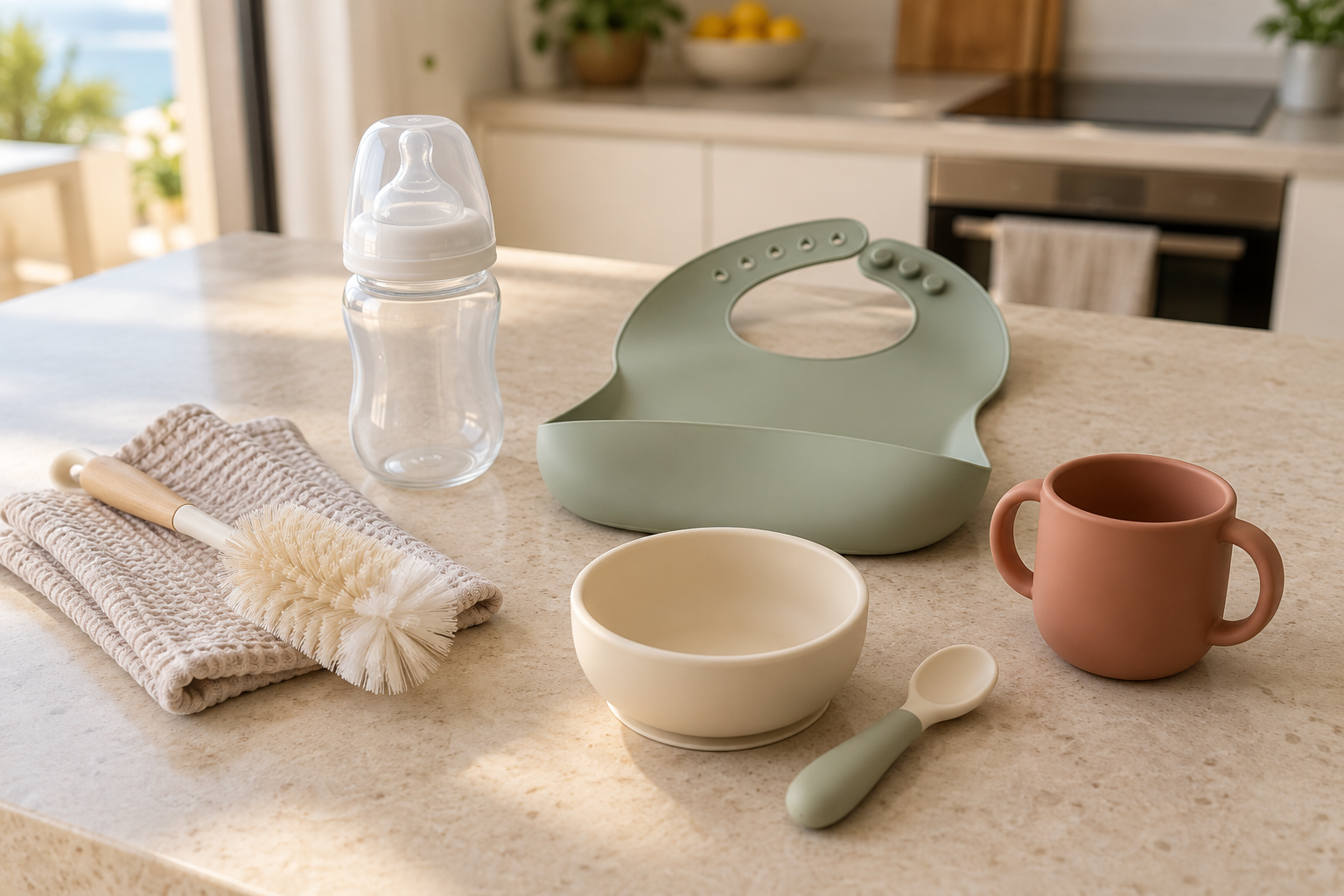
For formula feeding, calculate supplies from your baby’s usual feeds across the entire trip, with a reserve. Confirm availability before relying on buying your usual product abroad. Pack bottles, teats, a bottle brush, and the equipment needed for your cleaning and sterilising method.
The NHS advises sterilising bottles and teats until at least 12 months. Choose a method you can actually use at the accommodation and follow its instructions. A dishwasher cleans feeding equipment but does not sterilise it.
Follow formula preparation guidance and product instructions. Do not improvise preparation or storage because you are travelling. If your room cannot support your usual routine, resolve that before departure.
If your baby has started solids
- Familiar, suitable foods for the journey and first meals, stored as directed
- A small spoon and bowl or container
- Washable bibs
- The cup your baby is learning to use
- A confirmed suitable highchair or feeding seat, used according to its instructions
Offer food appropriate to your baby’s skills, with them sitting upright and supervised. Check destination rules before carrying food across a border. There is little benefit in packing a large collection of new feeding gadgets when you have not yet worked out which ones your baby uses.
What should you pack for sleep?
Arrange a suitable cot before travelling, then pack the sleep clothing and bedding that fit that setup. A familiar routine is useful; extra pillows and soft accessories are not needed to make a holiday cot comfortable.
- A confirmed cot or travel cot suitable for your baby, assembled according to its instructions
- Correctly fitting sheets, with a spare if not supplied
- Sleep outfits from your clothing allowance above
- A correctly fitting sleeping bag, if used, with an appropriate spare or a washing plan
- A room thermometer
- A familiar bedtime book and dummy, if used
Follow NHS safer-sleep advice: put your baby down on their back on a firm, flat sleep surface and keep the cot clear of pillows, bumpers, toys, and loose bedding. Do not add a mattress topper or extra padding to a travel cot. Use the mattress specified by its manufacturer.
Choose the sleeping bag and underneath clothing using its instructions and the actual bedroom temperature, not the outdoor forecast. When using a sleeping bag, add no other bedding. Our baby sleeping bag TOG guide explains the distinction.
Keep your first night’s sleepwear and feeding supplies together. Being able to find them quickly matters more than having a separate outfit for every holiday photograph.
Match outdoor clothes to the destination
Build a small set of outfits that work together, with removable layers for changing conditions. A six-month-old resting in a stroller has different needs from an older child running around.
For a mild destination, pack breathable base clothes, light trousers, and removable cardigans, with weather protection for the forecast. For colder weather, add suitable insulation and accessories rather than filling the suitcase with interchangeable thin jackets. For hot weather, prioritise lightweight clothes, shade, and avoiding overheating.
Use our baby clothing temperature chart for starting outfits, then adjust for wind, rain, sun, and whether you use a stroller or carrier. Take the layers needed at arrival in your travel bag rather than relying on collecting a checked suitcase first.
Sun, rain, and swimming extras
Bring a sun hat and suitable stroller shade for sunny outings. NHS sun-safety guidance recommends keeping older babies out of strong sun as much as possible, using lightweight coverage, and applying suitable SPF 30 or higher UVA/UVB sunscreen from six months. Never cover a pram opening with a blanket; it can cause overheating.
For swimming, pack swim nappies required by the venue, suitable swimwear, a towel, and dry clothes for afterwards. For rain, take the appropriate stroller cover and clothing protection, following equipment instructions and checking ventilation. These extras depend on your plans; they do not all belong on every holiday list.
Tiny Weather can help you plan clothing around the destination forecast and your child’s age. Use the forecast to choose useful layers, then adjust them to your baby’s comfort during the trip.
Stroller, carrier, car seat, and play
Choose transport equipment around the places you will visit. A stroller may be useful for long paved walks; a carrier may be easier on stairs or uneven routes. Test both before departure and follow their size, development, and use instructions.
Arrange a suitable car seat for every planned car transfer, including taxis. Confirm what a rental provider supplies rather than assuming “baby seat” describes the right equipment. If flying, check baggage and equipment allowances with the airline; our first-flight checklist covers those questions.
For play, start with two or three small familiar items, such as a washable toy, age-appropriate teether, and board book. A lightweight washable mat may be useful for supervised floor play. Check the floor for small objects and hazards each time you use it; a hotel room is not automatically babyproofed.
Health essentials and documents
Keep prescribed medicines, any required administration equipment, and relevant instructions accessible. Pack a thermometer and the routine care products you already use. Ask your clinician or pharmacist about individual medicine needs rather than adding unfamiliar treatments just for travel.
Confirm required travel documents for your baby, insurance cover, and any consent paperwork relevant to your situation. Save accommodation details, local medical contacts, and a way to access booking information offline. International destinations may need advance health preparation; check appropriate official travel-health advice for your itinerary.
The final packing checklist
- Clothes: choose the laundry or no-laundry quantities and adjust to normal changes
- Changing: nappies, wipes, cream, mat, and wet bags
- Milk: usual feeding supplies, preparation equipment, and a storage plan
- Solids, if started: suitable food, spoon, bibs, cup, and confirmed feeding seat
- Sleep: confirmed cot, fitting sheets, sleepwear, sleeping bag if used, and room thermometer
- Outdoors: forecast-appropriate layers, shade, hats, and activity-specific extras
- Transport: stroller or carrier as needed, plus arranged car seating
- Play: a few familiar age-appropriate toys or books
- Health and documents: routine essentials, required paperwork, and contact details
- Travel bag: feeds, changing supplies, two or three spare outfits, and arrival layers
- Arrival kit: first feed, first change, and first night’s clothes together
Before closing the suitcase, remove duplicates. An outfit allocated to the travel bag is already part of your total, and a romper can replace a top-and-bottom combination. Keep the reserve that matches your baby’s routine, rather than packing every possible option.
Frequently asked questions
How many outfits should I pack for seven days with a 6-month-old?
For a baby who typically uses one daytime outfit daily, start with 10 complete daytime outfits without laundry, or 6–8 with washing every two or three days. Increase this for frequent changes. Sleepwear is counted separately unless you deliberately share garments between day and night.
Can I buy nappies and formula at the destination?
You may be able to, but check specific products, sizes, shop locations, and opening hours. Bring enough to cover the journey, arrival, and delays. Do not assume a familiar brand name means the exact same formula product will be available.
Do I need to bring a travel cot?
Only if a suitable sleeping space is not confirmed at your accommodation. Ask about the actual cot, mattress, sheets, and size limits. Check its condition and assembly when you arrive, even if it was booked in advance.
What can I leave at home?
Usually, you can reduce duplicate outfits, bulky toy collections, and equipment reliably provided by the accommodation. Keep the essentials for feeding, safe sleep, travel, and your baby’s individual care. A short list works when the arrangements behind it are confirmed.
Does this list work for a winter holiday?
The feeding, changing, sleep, and document categories still apply. Replace the warm-weather extras with layers and protection for the actual forecast. Our winter baby clothing guide covers outdoor clothing; bedroom sleepwear still depends on indoor conditions.
About this guidance
Quantities and outfit suggestions are Tiny Weather’s editorial planning estimates, not medical requirements. Health sources are linked beside the relevant advice and were consulted in October 2026. Follow product instructions and confirm travel and accommodation arrangements before departure. Babies with individual health or feeding needs may need a plan from their healthcare professional.
Get today’s outfit in the app
Free to start on iPhone and Android.