 Tiny Weather
What Should a Toddler Wear in the Snow? A Clothing Checklist
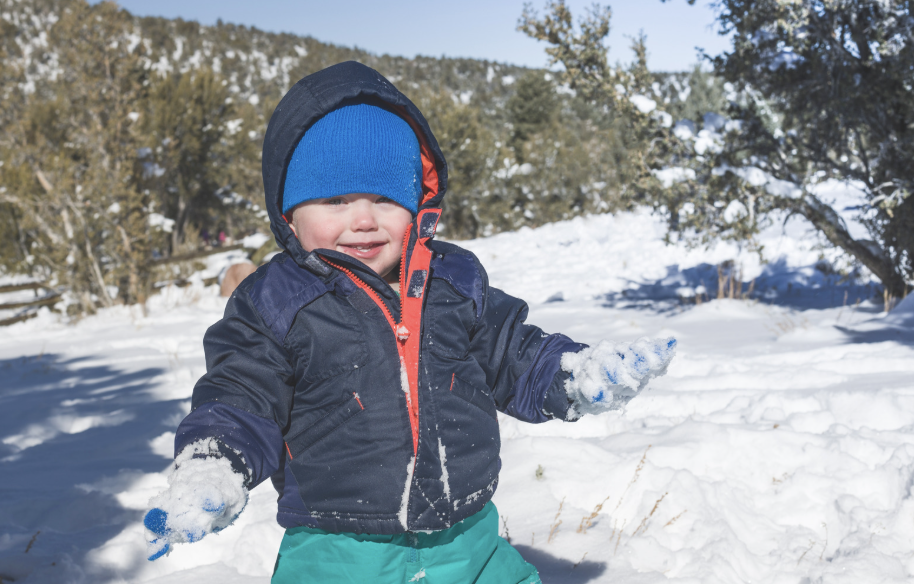
For snow play, dress a toddler in a comfortable base layer, removable insulation as needed, and weather-resistant outerwear: a snowsuit or a jacket with snow trousers. Add warm waterproof boots, socks, mittens and a hat covering the ears. Check that the complete outfit allows movement, and bring dry spare mittens and socks.
Choose for what your child will do. A toddler kneeling in slush, walking on a cleared path and sitting still in a stroller will need different adjustments, even at the same air temperature. The American Academy of Pediatrics recommends several thin layers for cold-weather activities; the examples here are editorial starting points, not a tested outfit system for every child.
For clothing across a range of temperatures, use our toddler clothing temperature chart. This guide focuses on keeping snow out, managing wet clothes and changing between play and travel.
Quick snow clothing checklist
- Comfortable base clothing that fits under the outerwear
- A removable jumper or fleece if the conditions and outerwear call for it
- Snowsuit, or jacket with snow trousers suited to wet snow and the forecast
- Warm waterproof boots that fit with the chosen socks
- Warm socks, with a dry spare pair
- Mittens, with a dry spare pair
- A well-fitting hat covering the ears
- A suitable neck warmer if needed, without loose ends
- Dry replacement clothes and a bag for wet items
- A nearby place to warm up and change
The Canadian Paediatric Society’s winter guidance recommends adjustable layers, ear coverage, mittens and warm waterproof boots. It also advises replacing scarves with neck warmers and avoiding drawstrings that can catch on play equipment.
Snowsuit or jacket and snow trousers?
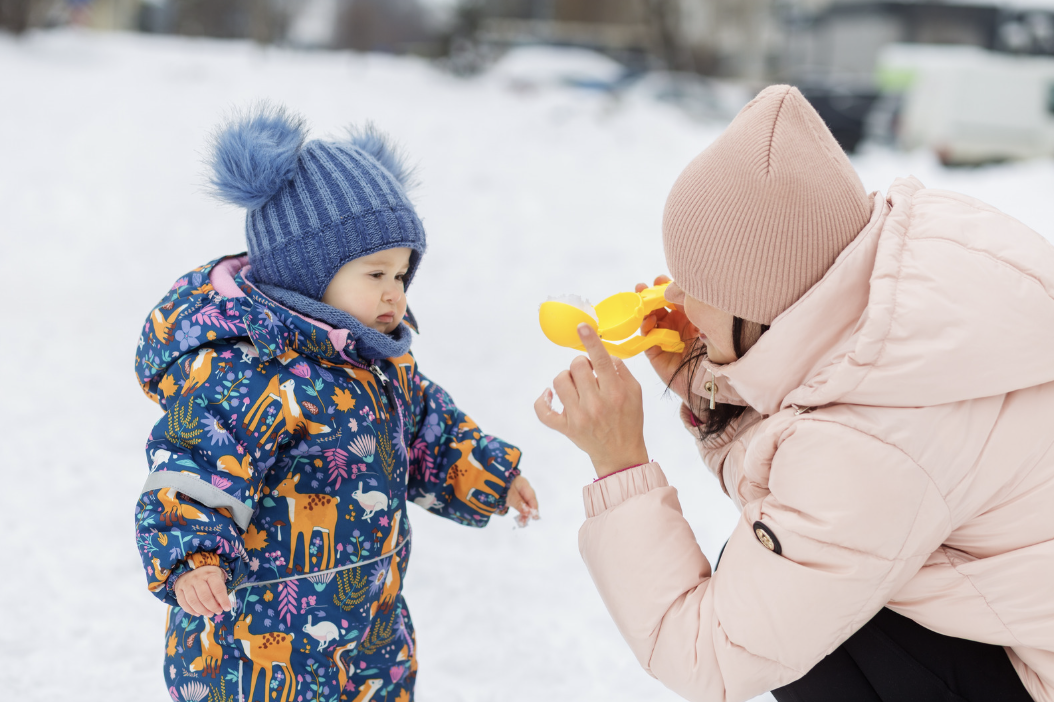
Both can work. Choose the option that fits your toddler, the conditions and the way you will spend the day.
| Option | Practical advantage | What to check |
|---|---|---|
| One-piece snowsuit | One outer garment to put on, with no separate jacket-to-trouser gap | Can your toddler squat, reach and sit? How will you manage a toilet visit? |
| Jacket and snow trousers | Pieces can be removed separately during a stop or change | Check coverage when your toddler raises their arms or bends forward |
| Waterproof shell over separate warm layers | Lets you vary insulation for wet, milder conditions | A thin rain shell is not insulated; assess what is underneath |
Try the whole outfit at home. Ask your child to bend down, reach for a toy and walk a few steps. Check for exposed wrists, ankles or lower back, and look for fabric bunching that restricts movement.
A thick insulated suit already provides warmth. Do not automatically add several heavy jumpers underneath it. For a trip with a café stop, think through how you will remove outer insulation indoors before deciding what goes under the suit.
What should a toddler wear underneath a snowsuit?
Start with comfortable base clothing, then decide whether a removable mid-layer is useful. The answer depends partly on how insulated the suit is. “Snowsuit” describes the garment’s shape, not a standard amount of warmth.
For example, a warm top and leggings under an insulated suit is a different setup from base clothing and fleece under an uninsulated shell. These are combinations to assess against the product instructions and conditions, not interchangeable recipes.
Make the next adjustment easy: choose a mid-layer you can remove without changing the entire base outfit. If your toddler is getting hot during active play, pause to adjust rather than leaving them bundled for a later stroller ride.
Boots and socks: test them together
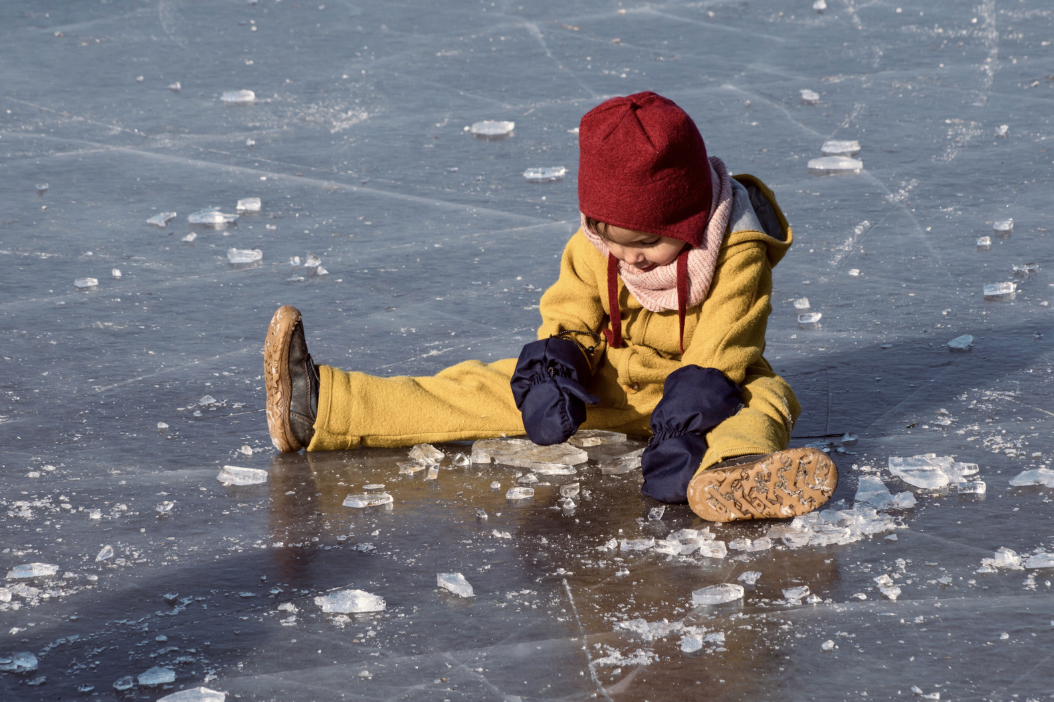
Choose boots for walking and contact with snow, not just for the journey from the car. Check the product’s waterproofing and fit rather than assuming a warm-looking lining keeps wet slush out.
IWK Child Safety Link recommends dry boots that are not too tight and one pair of warm socks. Test the boot with the sock your toddler will actually wear. Adding another thick pair is not useful if it makes the fit tight.
Check the overlap between the trouser cuff and boot as your child bends and walks. Follow the clothing manufacturer’s design for cuffs or gaiters. Pack dry socks where you can reach them without emptying the whole bag.
Mittens, hats and the gaps between garments
Mittens keep fingers together and are generally warmer than gloves, according to the Canadian Paediatric Society guidance linked above. Choose a pair your child can wear comfortably and that suits contact with wet snow.
Check how the mitten and sleeve meet. A good-looking outfit is less useful if a gap appears each time your toddler lifts their arms. Try the cuffs in the arrangement intended by the clothing manufacturer, then let your child move before leaving home.
Use a hat that covers the ears without slipping over the eyes. Keep scarves, loose cords and drawstrings away from play equipment. A neck warmer should fit without covering the face. See Health Canada’s children’s clothing advice for drawstring hazards.
Dry snow, slush and a stroller ride home
For snow play, the surface matters as well as the forecast. A child kneeling to build something may soak the knees and seat of unsuitable trousers while the air still feels mild to an adult.
Before leaving, ask:
- Will your toddler walk, sit, crawl or kneel in the snow?
- Is the snow dry, melting or mixed with puddles?
- Can you change wet clothes nearby?
- Will your child be walking home or sitting still?
Keep dry spares for the return journey. Do not rely on a warm stroller cover to solve wet clothing. The Canadian Paediatric Society recommends checking often that children are warm and dry and taking regular indoor breaks.
Follow local weather warnings and shorten or postpone the outing when needed. This article does not set one safe temperature or time limit for every toddler. Persistent shivering, unusual sleepiness or skin that becomes pale or numb are reasons to stop and seek medical advice; see the AAP cold-weather guidance.
Snow does not remove the need for sun protection
Check the UV conditions as well as the temperature, particularly for bright days or trips at altitude. The NHS notes that reflected sunlight from snow can be hazardous. Use suitable clothing, eye protection and sunscreen for exposed skin according to the conditions and product instructions.
Going indoors or getting into a car
At a warm indoor stop, remove unnecessary outer layers and check for damp clothing. Keep dry items separate from the wet suit so they are ready when it is time to leave.
For car travel, remove bulky coats and padded snowsuits before fastening the harness. The AAP explains that thick padding can compress in a crash and leave the harness loose. Follow your seat’s clothing and fitting instructions. If needed, add a blanket over the secured harness, clear of the face, rather than underneath the straps.
Put outdoor gear somewhere accessible if your first stop involves a walk. That is easier than searching the suitcase while your toddler waits at the car.
What to put in your snow-play bag
For a local outing, a useful starting pack is:
- One spare pair of mittens and one spare pair of socks.
- A dry base outfit if clothes are likely to get wet.
- A bag for wet clothing.
- A removable layer for a change in activity or weather.
- The usual drinks, food and changing supplies for your outing.
These are packing estimates; add more if you cannot return home easily. For an overnight trip, use our toddler holiday packing list and add the snow equipment your itinerary requires.
Tiny Weather can help you plan an outdoor starting outfit from the local forecast and whether your child is walking or riding in a stroller. For snow play, also check the surface, outerwear and spare-clothing plan. You can download Tiny Weather before your next outing.
Frequently asked questions
Can a toddler wear a rain suit in the snow?
Only assess it as part of the complete outfit and for its intended use. A thin waterproof rain suit may provide weather protection without the insulation of a padded snowsuit. Check the product guidance and conditions rather than treating them as equivalent.
Do toddlers need snow trousers for a short outing?
Consider contact with the ground. A short session kneeling in wet snow may call for more weather protection than a longer walk on a cleared path. Choose for the activity, not duration alone.
How many spare mittens should I pack?
One dry spare pair is a practical starting point for a local outing, not a guarantee. Take more or plan an indoor drying break if your toddler repeatedly removes them or you will be away for longer.
Should a baby sibling wear the same outfit?
No single outfit fits both situations. A baby in a pram or carrier has different surrounding warmth and activity. See baby outfits at 5°C (41°F) for a cool-weather example, or the winter babywearing guide for carrier setups.
About this guidance
Sources were checked on 15 November 2026. Clothing combinations and packing quantities are Tiny Weather’s editorial suggestions. This guide covers ordinary supervised snow play, not equipment requirements for skiing or other snow sports. Follow product instructions, local weather advice and individual healthcare guidance for children with medical needs.
Get today’s outfit in the app
Free to start on iPhone and Android.